Scams that targets the elderly
It started with “your identity was used in a crime.”
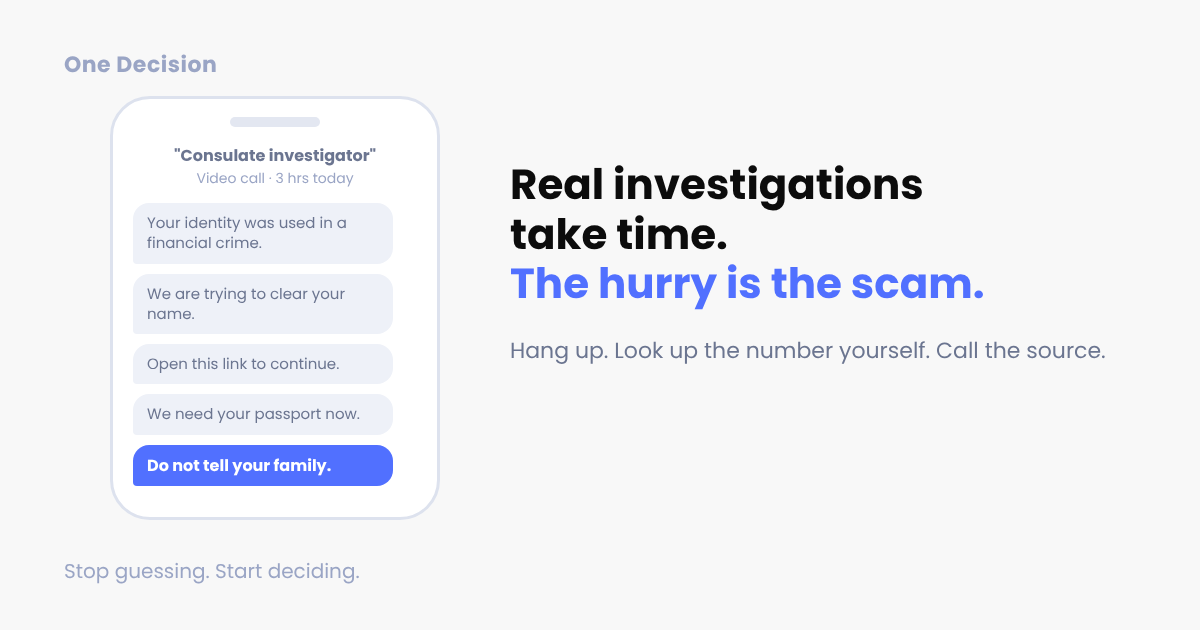
An older couple close to me got a call from someone claiming to be from a consulate. He said the wife’s identity had been stolen and used for financial crimes. He said they were investigating, and they were going to help clear her name.
It didn’t last one call. It lasted three weeks.
Every day, the “investigators” kept them online for hours. That was the point: keep them on the hook, and keep them from talking to anyone else. The calls moved from the phone to Signal, then to Microsoft Teams. They kept sending links to use. Every step was framed as part of the investigation, to prove her innocence.
Over those weeks, the couple shared their passports and bank account details. They were asked to report who was in the house and when they were leaving. They were told they were being watched. And they were told they could not tell their family.
So they didn’t. They were so scared that no one could get through to them, until the local police knocked on their door. A call to the real consulate confirmed it: there was no investigation. It was a scam from the first call.
They are smart, careful people. This scam didn’t work because they were naive. It worked because it was built to make them afraid, and it was aimed at them on purpose.
Older adults are the target, and the numbers keep climbing. In the FBI’s 2025 Internet Crime Report:
- Americans 60 and older reported $7.7 billion in losses, about 60% more than the year before.
- More than 48,000 older adults reported phishing or spoofing scams, nearly a quarter of all complaints from that age group.
- More than 8,600 older adults reported government impersonation scams, the exact type this couple faced. Across all ages, those scams cost nearly $798 million.
And that only counts the people who reported it. Many never do, out of fear or shame.
What it took to undo
Ending the calls was only the start:
- New phone numbers and new SIM cards
- New bank accounts, every one of them
- A full factory reset of every phone and computer, because they had clicked the scammers’ links
One link can mean starting over on every device you own.
The tells
Each of these is a red flag on its own:
- An official-sounding authority. A consulate, the IRS, your bank, the police.
- Fear and guilt. “Your identity was used in a crime.”
- A rescuer. “We’re on your side. We’re trying to clear you.” The scammer creates the problem, then offers to be the solution.
- Urgency. “We need to act now to protect you.” Real investigators don’t rush you.
- Moving the conversation. Off the phone and onto messaging apps and video calls.
- Links to click. Real investigators don’t send you links.
- Hours every day. If you stop, you might think. They can’t allow that.
- Secrecy. “Don’t tell anyone, not even your family.”
The last one is the clearest. No real government office will ever tell you to keep something from your family.
Real investigations are never rushed
This is the part scammers count on you not knowing. A real investigation takes time. It moves through official letters, case numbers, and offices you can visit in person. It does not need you on a call for hours every day. It does not need your passport over a video app. And it never needs your answer right now.
When someone “investigating” you is in a hurry, the hurry is the scam.
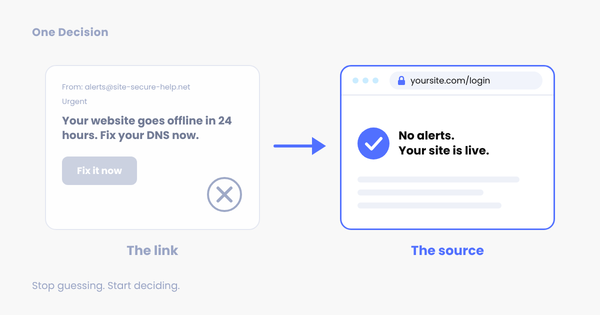
The decision: hang up and go to the source.
Same rule as last time. End the call. Look up the official number yourself, not the one they gave you, and call back. One call to the real consulate ended this. It could have ended it on day one.
This isn’t only a family problem. Business owners get the same calls: “the IRS,” “your bank’s fraud team,” “your payment processor.” The script changes. The playbook doesn’t.
This week
Call your parents, or any older person in your life. Tell them one thing: any official who says “don’t tell your family” is a scammer. Then agree on a family code word for any call that sounds urgent.
My bank recently mailed me a flyer about scams. That tells you how common this has become.
If something like this has happened to you or someone you love, hit reply. I read every one.
Found this useful? Forward it to someone who should read it: newsletter.simplifydigital.ai/scam-call-older-parents