Your time is money
The work that's quietly eating your week.
Quick question. How much of last week did you spend on work that anyone could do?
Chasing the invoice that's three weeks late. The social post. The supply order. Re-sending the same answer to the same question for the tenth time. Doing the books yourself because it's faster than explaining them to someone else.
None of it is hard. That's the trap. It's all easy, it all feels productive, and it's all stealing hours from the work only you can do. The conversation that lands the big client. The customer who needs a reason to come back. The pricing decision you keep meaning to make.
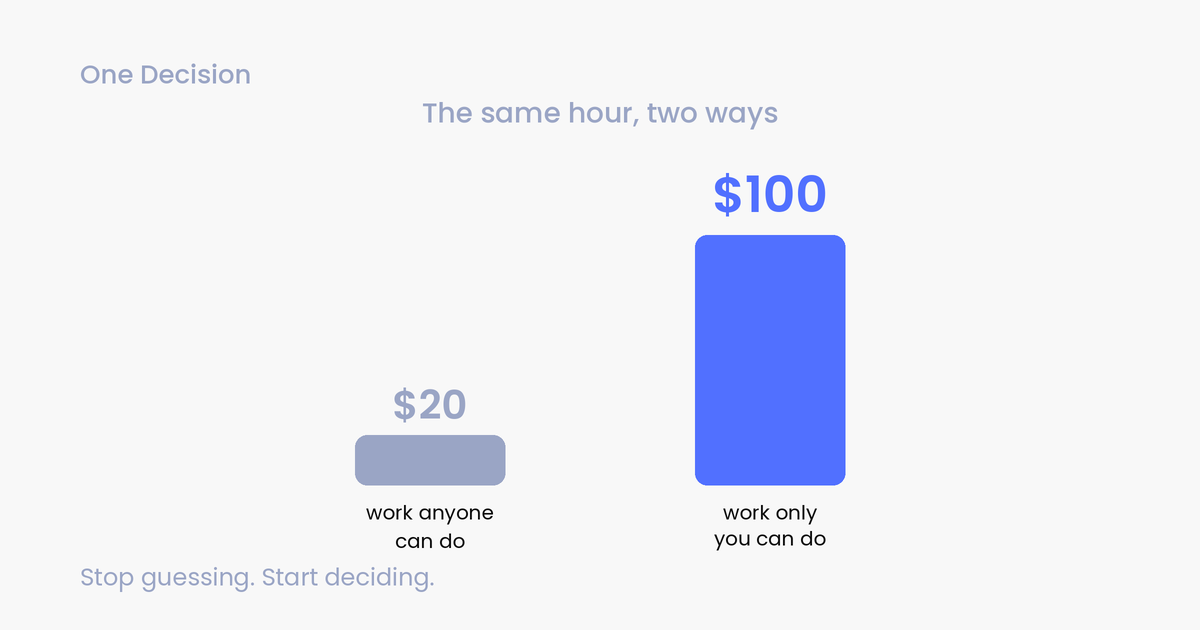
Here is the math you are avoiding. Every hour you spend on $20-an-hour work is an hour you did not spend on $100-an-hour work. Do that five times a week and you have handed away $400 of your own time to work someone else could cover.
One honest caveat. When you are starting out, you do everything yourself. That is the job, and it is hard to let any of it go. But as you grow, the math changes. Your time is money, and you have to invest it where it pays the most. That means getting surgical about what stays on your plate and what comes off.
You do not need a bigger team to fix this. You need to pick one task this week and stop doing it. Delegate it, automate it, or kill it. Just one.
The reason you haven't is the same reason every owner gives. "It's faster if I just do it." It is faster today. It is the thing keeping you stuck this year.
Pick the one task. Drop it this week. Permission granted.
P.S. Found this useful? Forward it to a fellow operator, or share the web version: link