The clients who quietly left
Last week we talked about the clients who stay. Today is the other side of that list: the ones who used to come every six weeks and just stopped. They did not leave. You misplaced them. Here is how to find them and the three-line note that brings them back.
Hi friend,
Last week I asked you to sit with a ratio: the share of your active clients who have been with you more than two years. The ones who are buying the habit of you, not the service.
Today is the other side of that list.
The clients who used to come every six weeks. Who you used to know by name. Who one day stopped booking. And nobody noticed because nothing dramatic happened.
They just drifted.
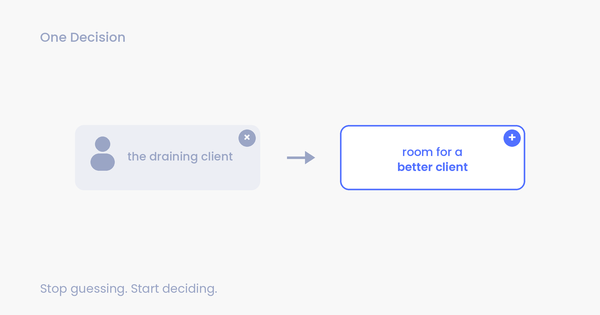
You did not lose them. You misplaced them.
There is a quiet retention move that almost nobody runs, because it does not scale and software companies cannot sell you a feature for it. It is the highest-return ten minutes you will spend this month.
1) The signal
Open the same booking system you opened two weeks ago. This time, sort your client list by last appointment date, oldest first.
Now look for the band between 90 and 180 days.
Anyone who used to come every 4 to 6 weeks and has not booked in 3 to 6 months is not gone. They are dormant. Two things are true about that group at the same time:
- They liked you enough to book repeatedly.
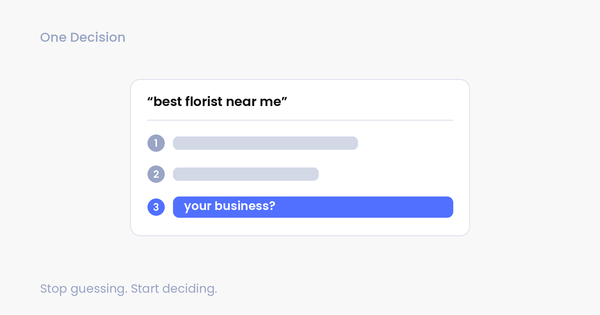
- Something interrupted the habit. A move. A baby. A budget cut. A bad week. A competitor who happened to be available the Tuesday they finally remembered to book.
The longer you wait, the further they drift. After about 9 to 12 months, the habit is dead and they are a cold lead again.
You are looking for the people in that 90 to 180 day window. That is the rescue zone.
2) The tool
Same tool as last issue. Booker, Fresha, Square, GlossGenius, Vagaro. OnePageCRM, HubSpot, or any CRM with a "last contact" date. QuickBooks or Xero if you invoice.
Export the list. Sort by last appointment date, descending. Read down until you hit 90 days. Then read down for another 90 days.
That is your shortlist.
Pick the top 10. The ones whose names you read and you can picture the person.
3) The action
Three of them. Not all ten. Three.
Send each of those three a one-to-one note. Not a campaign. Not a "We miss you!" Mailchimp blast with a 15% off coupon in the header. Those go in the spam folder and you know it.
A real note. From you. To them.
Here is the template, and you can keep it exactly this short:
"Hi [name], I was going through my books and noticed you have not been in since [month]. No pressure at all. I just wanted to say I have been thinking of you and the door is open whenever you want to come back. If you need a different time slot than we used to do, tell me what works."
No promo. No discount. No "we have a new product." Just the door.
You will get one of three responses. They will book. They will tell you why they left (gold, save this in your CRM). Or they will not answer, which is fine, because you only spent three minutes.
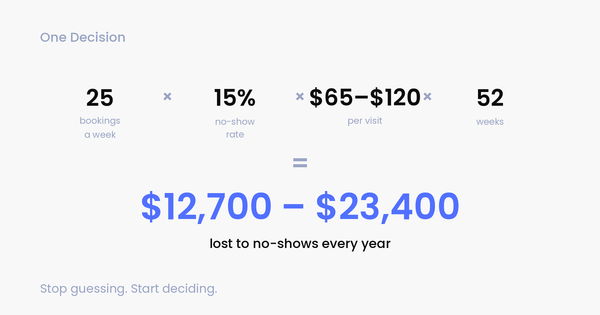
Run this once a month and you will rescue 20 to 30% of the clients who would otherwise have quietly turned into churn statistics.
If this move works for you and you want a quick read on where the rest of your stack stands, the Business Checkup starts with three questions and a 0-to-100 score on your digital foundation. Or hit reply with "I sent 3" and I will send you the exact follow-up cadence one-to-one, including the second note for the ones who book and the third note for the ones who go silent again.
If this is useful, forward it to one operator who needs it. The web version lives here.
Talk soon, Anne-Cécile
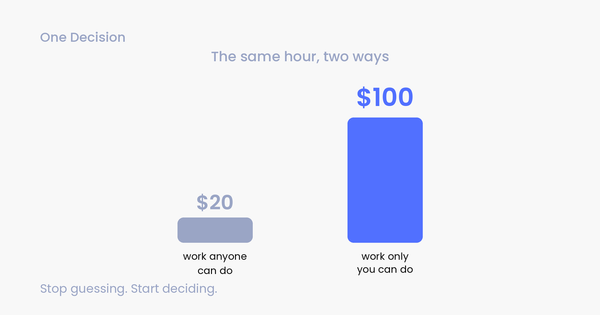
P.S. The reason this works is the same reason the price raise works. You are not running a transactional business. You are running a relationship business that happens to charge money. Treat the data like a relationship and the numbers follow.