Your no-show math
Pull last month's no-show count. Then turn on one thing.
You know the feeling. A client doesn't show, doesn't call, and the slot just sits there. You shrug it off as the cost of doing business and move on.
It is worth knowing what that costs you.
The signal: how many clients didn't show up or cancelled at the last minute last month, and how full your calendar was.
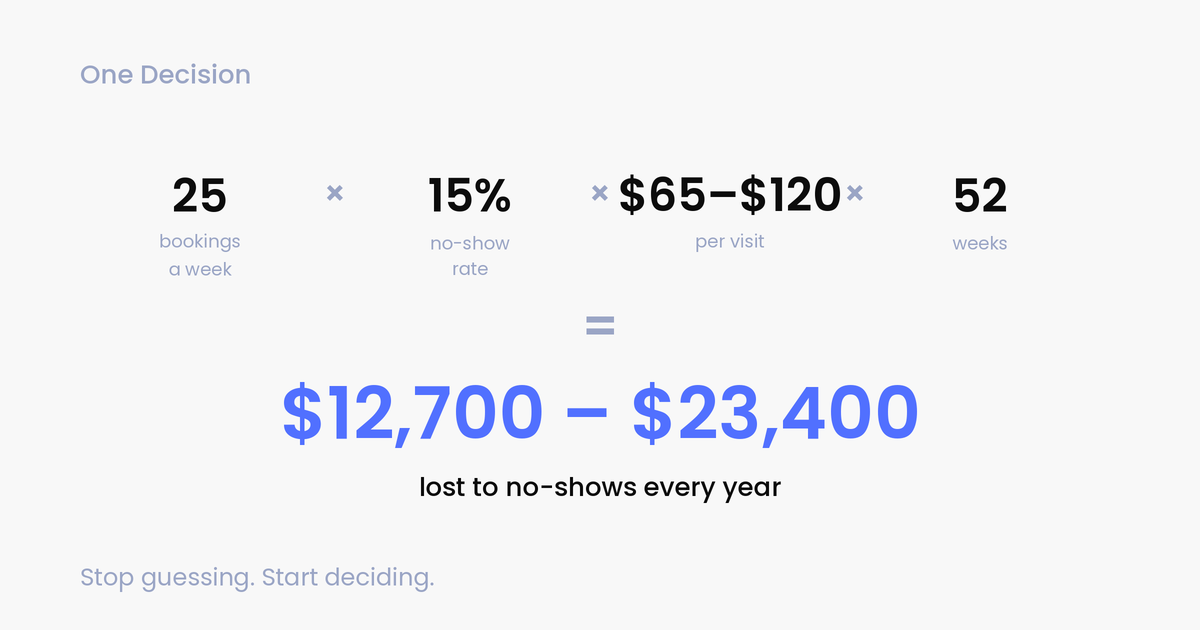
For salons the no-show rate runs around 15 percent, and across service businesses it lands between 10 and 25 percent. Let's put real numbers to show you. A salon that books 25 appointments a week, at a typical ticket of $65 to $120, loses between $12,700 and $23,400 a year to a 15 percent no-show rate. And that is before the color service or the retail add-on that would have come with the visit.
Here is the part that stings on a thin margin. Salons keep 8 to 15 percent of revenue as profit. So a no-show is not a 15 percent loss on one ticket. It is close to a total loss, because your rent, your time, and your prepped station were all paid for whether the client showed or not.
The tool you already pay for: your booking system should report no-show and cancellation counts, and most show slot utilization, meaning booked hours against available hours. You do not need a new tool. You need to open the one you have and read the report you have been scrolling past.
And if you are not on a booking system yet, still running on texts and your own memory, that is worth naming too. A no-show leaves no record that way, so you are flying blind on the exact number that is costing you the most.
The action, under 30 minutes: Pull last month's no-show count. Multiply it by your average ticket. Sit with the annual number for a second. Then turn on one thing this week, not three. Either a deposit on new clients, or a same-day standby list for your regulars.
Deposits do the heavy lifting. Salons that added them have seen no-shows drop by 29 to 70 percent. A standby list catches the slot before it goes cold. Both are features in most modern booking tools, so this is a setting to turn on, not a new system to buy. Pick the one that fits your clients and switch it on. You can add the second next month.
A deposit does not have to apply to everyone. Put it on new clients, or set it to trigger automatically for anyone who has no-showed before. Your loyal regulars never get asked for one. The people who walk away over a reasonable deposit were the most likely to skip anyway, and the clients who stay are the ones already filling your good weeks.
A cancellation policy does not cost you clients. The ones who walk over a reasonable deposit were the most likely to no-show anyway. The ones who stay are the ones already filling your good weeks.
Is your booking system helping you drive your business? Want me to run your utilization and no-show numbers with you? Reply to this email
P.S. Found this useful? Forward it to a fellow business owner, or share the web version: link